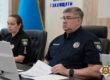

Returning to civilian life after the war requires not only physical but also psychological recovery. This important topic was dedicated to the regional forum «Psychological Support for Veterans: Return to Life», which was held at the Donetsk State University of Internal Affairs on the occasion of the University’s 65th anniversary.


 To discuss current approaches to supporting veterans and their families, the event brought together scientists, practical psychologists from the Main Office of the National Police in the Kirovohrad region, the Main Office of the State Emergency Service of Ukraine in the Kirovohrad region, the State Enterprise «TMA of the Ministry of Internal Affairs of Ukraine in the Kirovohrad region», military unit 3117 of the National Guard of Ukraine, representatives of the medical sphere and public organizations, as well as specialists in supporting war veterans .

 On behalf of the DonSUIA rector, the University’s vice-rector, police lieutenant colonel Ruslan Vradii, addressed the participants. In his speech, he emphasized that activities of psychological services play a key role in strengthening the resilience of our society in conditions of military challenges.

 Developing the theme discussed, head of the psychological support department of the Ministry of Internal Affairs of Ukraine, police colonel Andrii Kostiuk presented a practical manual «Programs of recovery measures in the mental health sphere and psychosocial support of the Ministry of Internal Affairs staffers and their families in conditions of military challenges».
 In her turn, police lieutenant colonel Olena Kovaleva, head of the psychological support unit of the personnel management department of the Special Purpose Police Department «Joint Assault Brigade «Liut», shared her practical experience. She highlighted the specifics of psychological support for police officers and their families, cooperation with foundations in the rehabilitation process, and the work of psychologists in the combat zone.
 The participants paid special attention to modern methods of self-recovery, psycho-relaxation and the role of adaptive sports in the rehabilitation of veterans. During the discussions, the need to develop psychological services, implement uniform standards of assistance and strengthen interagency cooperation for effective support of veterans and victims was touched upon.
The event became an important platform for exchanging experience and developing effective methods of psychological support for defenders.